
The Real Cost of Choice—Debunking Myths Around Affordable Access Programs
Over half of all college students have reported enrolling in fewer credits simply because they couldn't afford the required materials. This single statistic reveals the painful contradiction at the heart of the modern affordability debate: How can a system that actively prevents over half its students from participating possibly claim to offer meaningful "choice"?
The rising cost of higher education is a persistent national concern, yet few aspects of student spending are as misunderstood as the price of course materials. For too long, the model promoted as “student choice” has pushed students into a tradeoff that should never exist—between what they can afford and how prepared they are to learn. This is not a true "choice." It is a system where preparedness hinges on timing, privilege, and a student's ability to pay upfront.
In response, many colleges and universities have adopted Affordable Access (AA) models such as Inclusive Access (IA) and Equitable Access (EA). These models ensure students receive their required materials by Day 1 by treating them as part of the student’s overall cost of attendance. EA programs provide a single, flat fee that covers all required materials for the term, while IA uses course-based pricing in which costs vary by course or title and depend on individual faculty adoptions. By centralizing delivery and simplifying how materials are accessed, Affordable Access models reduce uncertainty for students, improve budgeting predictability for institutions, remove affordability barriers, and strengthen academic readiness.
This piece, the first in BibliU’s "myth-busting" blog series, confronts these accusations head-on. We contend that Affordable Access models are not a cost-creator but a structural correction to long-standing inequities in the traditional course materials market—one that grants every student the most essential choice: the choice to be prepared and succeed.
Myth #1 Busted: Access Programs Cost Students More
The misconception that access programs increase student costs is a flawed argument built on a misleading "illusion of savings". This misunderstanding is often fueled by critics comparing a consolidated Affordable Access program fee, such as those used often in Equitable Access models, to a single used or rental book price while overlooking the total cost of all required materials.
The reality is that most modern courses require multiple materials, not just one book. Some required resources—like online courseware, access codes, or digital labs—cannot be purchased used or resold at all.
Another common misconception is that students can always rely on used or rental textbooks to reduce costs. In practice, those options are often limited or unavailable. Publishers frequently restrict the resale market for new editions, and campuses may struggle to source enough rental copies to meet demand.
Under this fragmented purchasing system, students often delay or skip purchases in efforts to save money—a habit that frequently results in lower grades or course withdrawals. While students may feel like they're saving in the moment, those perceived "savings" often translate into greater academic and financial costs over time.
Affordable Access models solve this problem by replacing unpredictable, piecemeal purchasing with a transparent pricing structure. Students participating in these programs save 36% on average per course.
On a broader scale, Affordable Access models have also had a measurable impact on the market. Following federal regulation in 2015, the annual growth rate of course material costs dramatically dropped from 6.1% to 0.3%, demonstrating that access programs place downward pressure on the entire market, according to a report by Tyton Partners.
Myth #2 Busted: Access Programs Deny Student Choice
The argument that Affordable Access programs deny student choice misinterprets the very meaning of student autonomy. Insistence that sourcing materials independently represents genuine student choice ignores the system's inherent flaw: it imposes a false trade-off where students must choose between acquiring expensive materials and meeting other financial obligations within the outdated "find and acquire" structure. The overwhelming outcome is that students may never obtain all materials, resulting in lower engagement and delayed learning.
A crucial difference lies between the opt-in and opt-out adoption models. Opt-in models recreate the same barriers that define the traditional textbook market. Students must self-navigate timing, affordability, and sourcing, leading participation in Inclusive Access models to collapse to roughly 36%. This pattern reflects structural exclusion, not meaningful choice.
Opt-out models remove these barriers. Access is delivered automatically, priced through enrollment scale, and IA participation consistently exceeds 90%, including documented rates of 96%. Students retain full autonomy, yet remain active in the program because the model supports Day 1 readiness and academic preparation.
Many institutions have implemented opt-out because it is the only design that delivers access at scale. When a student’s required course materials are automatically delivered on the first day of class, they are set up for success from the beginning, which translates directly into improved persistence and completion metrics.
Affordable Access Closes the Gap
We see in real time the power of AA models in their ability to improve these measurable outcomes, particularly for students facing financial or logistical barriers. This structural solution acts as a proven academic intervention, showing profound gains across student groups:
- Course Completion and Withdrawal: Research suggests that Equitable Access programs support stronger academic outcomes for participating students. Analysis across EA participants at multiple two-year institutions demonstrates a 15.8% increase in course completion rates and a 14% reduction in course withdrawal rates when compared to non-participants.
- Equity Impact is Significant: The positive academic impact is profoundly greater for racially underrepresented and financially disadvantaged students. This same study shows that Black students saw their course completion rates increase by over 54% with the implementation of EA. Pell Grant students who participate in EA have a 17% increase in course completion compared to non-participants.
- Success Across Program Types: Research examining Inclusive Access implementation shows measurable gains for key student groups. Following IA adoption, success rates for Black students increased by 12.8% and female student success rates increased by nearly 4%.
When every student starts with the same access to materials, performance gaps narrow and overall completion improves.
The Path to Better Learning
The ultimate cost is not the Affordable Access fee; it is the cost of inaction—the academic barriers perpetuated by the status quo of "find and acquire." This model sends a demoralizing message: that a student's right to succeed is contingent on their ability to pay out-of-pocket.
To truly address this, institutions must shift toward transparent, data-driven solutions:
- Affordable Access Solutions: The path forward is through clarity and predictability. BibliU champions an Access model that provides ease and clarity for students, offering clear pricing models bundled directly within tuition, regardless of variable or flat fee billing. These flexible and scalable solutions ensure institutions can give students everything they need from Day 1, without breaking the bank.
- Gold Standard Execution: By partnering with a solution like BibliU that meets institutional needs with transparency and exemplary customer service, leaders empower every student with the true choice of academic success.
The case for Affordable Access is clear. These models strengthen affordability while creating conditions that support closing the opportunity gap and increasing student outcomes. Leaders that choose transparent, data-driven solutions can simplify costs and eliminate institutional friction, while also transforming the choice to be prepared into a mandate for success.
Stay tuned for our next installment where we tackle more misconceptions about Affordable Access.

Getting Ahead of Your Bookstore Renewal
Bookstore contracts rarely get evaluated head-on; instead, they quietly roll into another term once the renewal date arrives before anyone's carved out time to look at alternatives. Given how much the vendor landscape has already shifted, that kind of drift is more expensive than it used to be.

The Future of Dual Credit: Embracing Growth
Dual credit is evolving from a niche elective into a national movement that significantly boosts college completion rates. By replacing "textbook chaos" with digital access, schools can build a more sustainable bridge to student success.
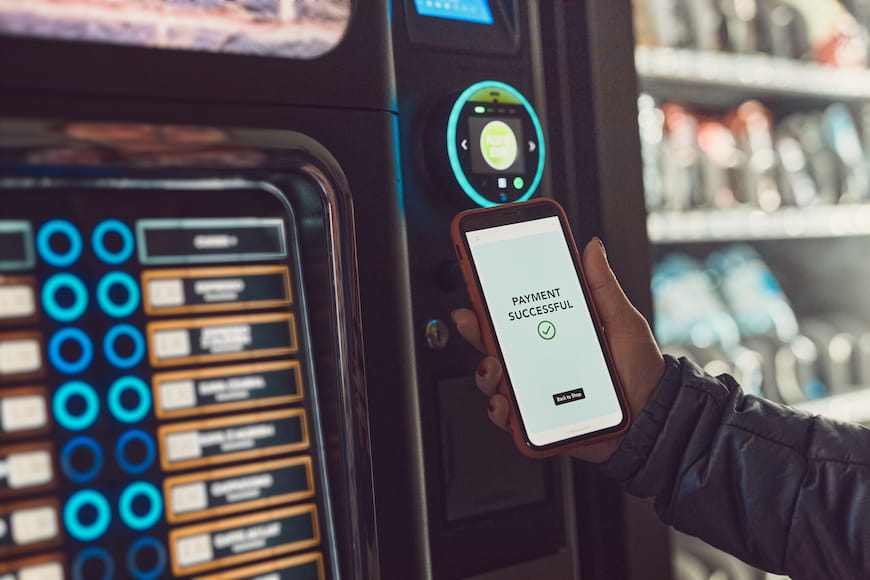
Sushi on Demand & Smarter Campuses: How Student Expectations Are Reshaping Innovation
Drawing on insights from Erik Russell of Occidental College on Campus Convos, this blog explores how innovations in auxiliary services reveal a bigger lesson for higher ed: let technology deliver on-demand convenience, while people provide the human touch that makes the student experience truly personal.